Here’s your guide to catching Curaçao’s most prized species: the tricks I have heard from my friends at Playa Piskador
Here’s your guide to catching Curaçao’s most prized species: the tricks I have heard from my friends at Playa Piskador
Yellowfin Tuna & Blackfin Tuna
Where they roam: Tuna love the steep drop-offs around the island—Playa Kalki, Westpunt, and the north coast are hotspots.
How to catch them:
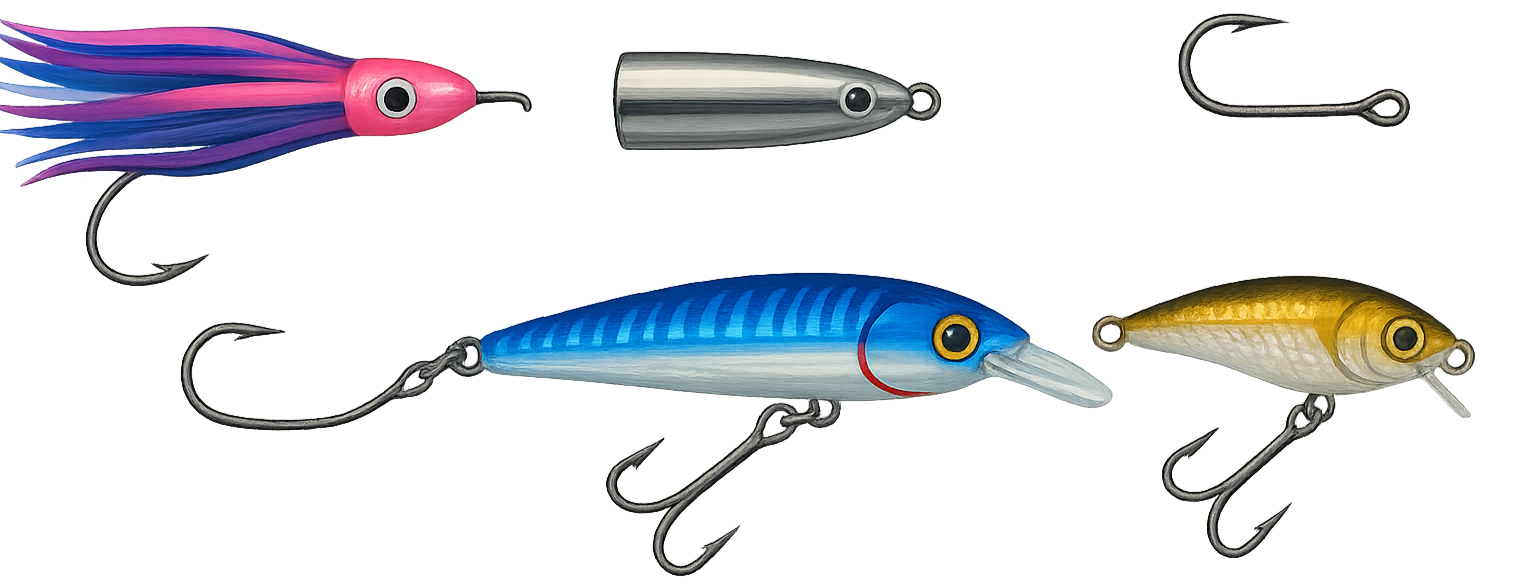
- Trolling is king. Use small feather jigs, cedar plugs, or chrome bullet heads.
- Tuna here respond well to dark-blue, purple, or black lures on bright days.
- Keep your speed up … 6–8 knots is the magic range.
- Look for boiling bait balls and diving seabirds; if the birds are feeding, tuna are beneath them.
Local secret: If flying fish are around, rig a skipping bait behind a trolling line. Tuna explode on them.
Wahoo (Mula)
Where they roam: Wahoo cruise the edges of the island’s sudden 600–1,000 ft drop, especially off Westpunt and Santa Cruz.
How to catch them:
- Fast trolling, really fast. 12–18 knots is standard in Curaçao.
- Use long, skinny lures: Yo-Zuri Bonitas, Islanders with ballyhoo, or bullet lures with wire leaders.
- Prime times are early morning and late afternoon.
Local secret: Wahoo love a clean temperature break. If you see a sharp line where the water shifts colour, stay on it.
Dorado / Mahi-Mahi
Where they roam: Floating debris, weed lines, driftwood—and sometimes right off the cliffs.
How to catch them:
- Troll brightly coloured skirted lures (green/yellow, pink/white).
- If you hook one, don’t bring it in immediately, other mahi will follow it. Keep it in the water to attract the school.
- Cast small jigs or ballyhoo to pick up additional fish.
Local secret: After a big storm, watch for floating coconuts or pallets: Mahi love these travelling fish hotels.
Barracuda
Where they roam: Everywhere. The reefs at Playa Jeremi, Lagun, and the northern cliff lines are full of them.
How to catch them:
- Casting heavy spoons, stickbaits, or trolling small diving plugs.
- Use wire leaders, a single bite can shear 80-lb mono like spaghetti.
- Dawn and dusk are ideal.
Local secret: Metallic lures, especially silver, trigger strikes when the sun hits the water.
Snapper (Red, Mutton, Yellowtail)
Where they roam: Reefs, wrecks, and underwater ledges—deep off Jan Thiel, Caracasbaai, and Westpunt.
How to catch them:
- Bottom fishing with squid, sardines, or cut ballyhoo.
- Use a sliding sinker rig and stay patient.
- Snapper hit best on moving tides.
Local secret: At night, yellowtail snapper come up to feed. Chum the water lightly and use tiny hooks with small pieces of bait.
From the Shore: Curaçao’s Cliff Fishing
For shore-based anglers—especially at Watamula, Playa Forti, and Shete Boka—Curaçao offers dramatic, powerful fishing even without a boat.
What to target: baracuda, jack crevalle, tarpon (at night), and occasionally mahi if a weed line drifts close.
How to do it:
- Use long rods (10–12 ft) to clear the rocky edges.
- Cast metal jigs or hard plugs far beyond the wash.
- Always scan the water for movement—large fish often come right up to the cliffs.
Local secret: After sunrise, schools of bonito sometimes crash bait right along the cliffs. If you see splashes, cast immediately.